
What are the minimum order requirements from a kurti wholesaler?
by Charlotte Williams February 28, 2026
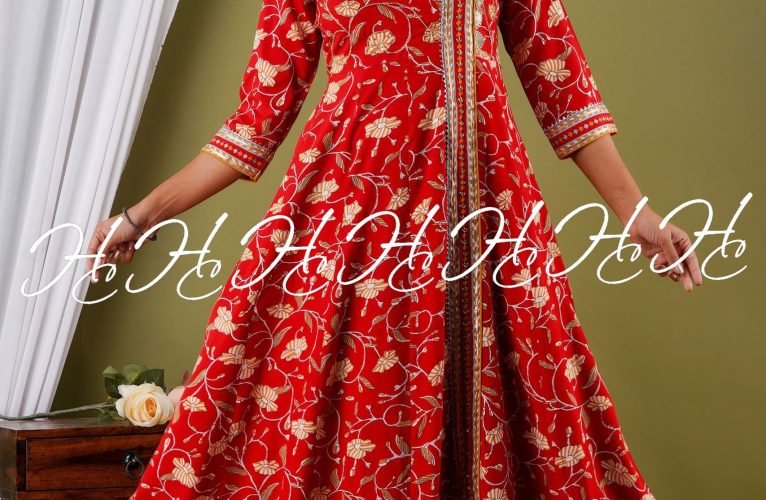
If you plan to start or expand your ethnic wear business, you must clearly understand the minimum order requirements from a wholesaler. When you connect with a kurti wholesaler in Jaipur, you often encounter specific order policies that directly affect your budget, inventory planning, and profit margins. Many retailers also search for kurti manufacturers near me to reduce shipping time and improve coordination. No matter your approach, understanding minimum order quantities (MOQs) helps you make smarter purchasing decisions.
Minimum Order Quantity refers to the smallest number of pieces you must purchase in a single order. A kurti wholesaler sets this requirement to maintain production efficiency and profitability. Since wholesalers operate on bulk manufacturing models, they depend on larger orders to reduce per-unit production costs.
Most wholesalers do not entertain very small quantities because fabric sourcing, dyeing, stitching, and packaging require time, labor, and setup expenses. When you order in bulk, the wholesaler spreads these costs across many units, which allows them to offer competitive pricing.
The minimum order requirement can vary depending on several factors:
A standard kurti wholesaler in Jaipur may require anywhere between 50 to 200 pieces per design. Some manufacturers allow mixed sizes within the same design, while others require fixed size ratios such as S, M, L, and XL in equal quantities.
If you approach kurti manufacturers near me who operate on a smaller scale, you might find more flexible MOQs. Smaller units sometimes accept orders starting from 25 pieces per design, especially for first-time buyers. However, lower quantities may come at slightly higher per-piece costs.
You must also distinguish between ready stock and custom manufacturing orders.
Ready Stock Orders
When you purchase from ready stock, the MOQ may be lower. Many wholesalers allow retailers to pick assorted designs and sizes as long as the total order value meets a minimum billing amount. For example, a kurti wholesaler in Jaipur may set a minimum billing value of ₹10,000–₹25,000 instead of a fixed number of pieces.
If you request custom designs, private labeling, or exclusive prints, the MOQ increases. Custom production requires fabric sourcing, sampling, and additional quality checks. In such cases, wholesalers often demand 100–300 pieces per design to justify production setup costs.
Wholesalers do not set MOQs randomly. They consider operational efficiency and market demand. Here are the main reasons:
When you work with a reputed kurti wholesaler in Jaipur, you benefit from structured production systems that rely on these efficiencies.
Not all wholesalers enforce strict policies. You can often negotiate depending on your business relationship and order frequency.
If you place repeat orders consistently, wholesalers may reduce the MOQ over time. Building trust plays a key role in securing flexible terms.
Some kurti manufacturers near me allow mixed designs within one bulk order. For example, instead of ordering 100 pieces of one design, you may order 20 pieces each of five different designs.
During slower sales seasons, wholesalers may accept smaller orders to keep production lines active.
Advance payments sometimes help you negotiate lower minimum quantities.
If you run a boutique or sell through online platforms, you might hesitate to invest heavily in one design. In such cases, you should communicate your target market clearly. Many Jaipur-based suppliers understand the needs of small retailers and startup brands.
A reliable kurti wholesaler in Jaipur often offers starter packages for new resellers. These packages include curated designs with balanced size ratios to minimize unsold inventory.
If you search for kurti manufacturers near me to reduce logistics expenses, you may gain additional flexibility because local sourcing eliminates high shipping costs.
Instead of focusing only on minimum order requirements, you should evaluate:
Sometimes a slightly higher MOQ from a trusted kurti wholesaler in Jaipur proves more profitable than a lower MOQ from an unreliable supplier. Quality directly impacts repeat customers and brand reputation.
You can manage minimum order requirements strategically:
Many kurti manufacturers near me welcome collaborative bulk orders because they maintain production volume without depending on a single buyer.
Minimum order requirements form the backbone of wholesale trade in the kurti industry. A professional kurti wholesaler in Jaipur sets MOQs to maintain quality, reduce waste, and optimize production efficiency. While standard quantities range from 50 to 200 pieces per design, flexibility depends on your negotiation skills, order consistency, and supplier relationship.
tags: kurti wholesaler in jaipur

In today’s fast-paced world, convenience plays a major role in how businesses and consumers purchase...

Aluminium is one of the most widely used materials in Singapore’s construction, marine, transport, and...

Aluminium plays a critical role in construction, manufacturing, engineering, and precision industries in Singapore. Because...